![]() |
|
![]() |
|
First-ever Grammar Books in Dari and Pashto On January 29, Nai Supporting Open Media in Afghanistan released the country’s first-ever grammar books in Dari and Pashto written specifically for journalists, a resource it said could help numerous media workers. (Full Story - PDF) Internews Network is an international NGO that supports independent media and access to information for people around the world. Founded in the United States in 1982, we have worked in 70 countries to date. Internews began work in Afghanistan in 2002. Activities in Afghanistan include:
Internews Afghanistan |
February 2008 Internews AfghanistanDear Friend, I hope you will enjoy this update on Internews activities in Afghanistan. A big thank you to everyone for all the feedback we received from the first newsletter. We appreciate all of your comments. Warm regards, Vanessa Johanson Salam Watandar Reporter Receives New Award for Journalistic ExcellenceDaoudshah Mal comes from a family with strong ties to journalism, "My father was a journalist for many years; it is what I have always wanted to do." This family history plus the pride he takes in his work meant he was thrilled when he was told he had been selected to receive an award for excellence in journalism from the Parliament Speaker, Yunus Qanumi. Masood Farivar, Manager of Salam Watandar, told Internews, "Since taking over the parliament beat two years ago, Mal Sahib has covered the two chambers of Shora with an exemplary commitment to the high journalistic standards for which Salam Watandar is known." Daoudshah Mal is very passionate about the parliament. He sees all the stories he covers as important. "Afghan people have a right to know what is happening in parliament, each story affects the public. I am always on duty, my office is never closed!" Yet it is not without its challenges. Democracy is still very young in Afghanistan, the parliament is still learning and this can cause problems when trying to prepare a well researched article. DaudMal Shah told Internews, "Often MP’s do not understand the role of the media. It has happened that the Honourable Speaker asks all journalists to leave the room while a certain topic is being discussed. After the debate no information is shared with us, the lack of transparency is very worrying." Having said this he is hopeful for the future of Afghanistan, "We just need more time. Ask me in 10 years if I think democracy is safe here in Afghanistan, then I will be able to answer you."Survey of Women Broadcasters by Nai: Supporting Open Media in AfghanistanBy Tamara Aqrabawe, Nai Mentor
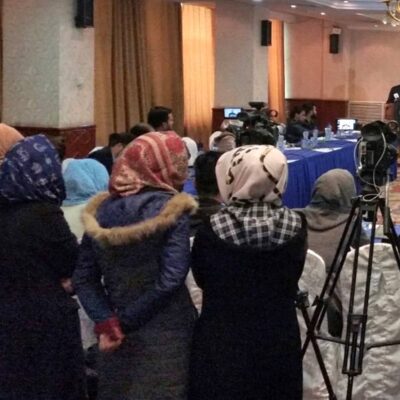
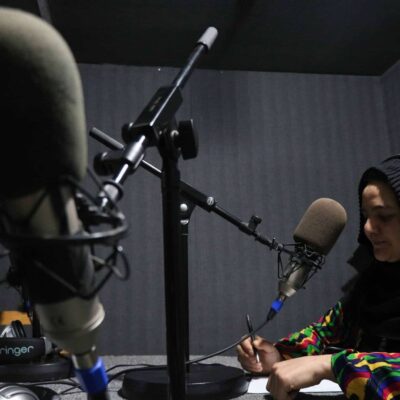
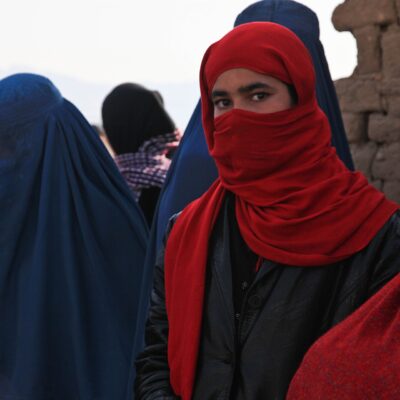
In Afghanistan, after three decades of continuous war that culminated with the fall of the Taliban, the suffering from on-going post conflict and continuing insecurity remains. Women continue to be challenged by factors such as customary practices, social conditioning, and the security situation. There is an urgent need to restore women’s lost rights and give women a voice in contemporary society. One way of doing this is through radio. Radio is the only media which reaches a majority of Afghanistan’s population. A majority of women are still illiterate. This group can’t read newspapers so radio is the only way they can receive information and have a voice. International agencies have supported women to step into the radio field. A handful of radio stations led by women have become very effective in taking a lead in social change. The discussion with women broadcasters supported the idea of organizing a survey to assess women’s needs. The idea was linked with the International Campaign for surveying women broadcasters working in community radio that was arranged by the Women’s International Network of the World Association of Community Radio Broadcasters (AMARC). Aneesa Husaini and Hourea Faizi from Nai became focal points for the survey. Nai management decided to localize the women radio broadcasters questionnaire and to empower the team of women at Nai to communicate with their female colleagues. At the same time, it was felt that this exercise would contribute to improving their skills and enable them to conduct a regular survey on gender in radio stations. Over a period of four weeks, Nai spoke to women at 15 radio stations from all over Afghanistan. This was done to try and understand the radio station objectives and mission. Originally, we tried to survey 25 radio stations, but it turned out that only 15 out of 25 had any women staff at all. The questionnaire was focused on the participation of women; the impact that radio programs have on women; whether radio content are women focused and what kind of radio programs women in these regions would like to listen to. Among the 15 stations assessed, only two radio stations Radio (Sahar) in Herat and Radio (Haqiqat) of Samangan province had defined objectives and missions-statements that related to increasing the level of awareness female staff have about their rights, their children’s rights and their family relations. The survey clearly shows that out of 15 radio stations, only 4 have women managers or women in high ranking positions. At Radio Balkhi not only the leadership, but all other key jobs such as technical, program production and so on are managed by women which is highly commendable. In terms of the radio content and the relevance to women’s behavioral change - it was found that each radio station had their own productions ranging from a minimum of 8 programs to a maximum of 50 per month. However, the percentage of programs being hosted by women ranged from 50 to 90%, a positive outcome. On the content side women’s issues, such as domestic violence and rights, were receiving limited attention. Through the survey Nai found that it was important for women to speak together and express themselves. Although some good work has been conducted to encourage women in the media, there is still a need to continue to improve and facilitate measures that will assist greater women’s participation. Nai found that the media environment still has significant constraints within radio workstation environments and the society as a whole continues to limit women’s participation. The women Nai surveyed found the exercise a great opportunity to speak out, identify, and share their problems and radio experiences. Women in the provinces were pleased that their colleagues are keen to know about their situation. The results of the survey will be useful for future program design and radio content planning, further contributing towards empowering women in this country. One day we all hope that women will be able to stand side by side with men in the development of Afghanistan and play a crucial part in being part of shaping its everyday life and future. Tamara Aqrabawe joined Internews in Afghanistan from Jordan where she participated in establishing the first community radio station, AmmanNet. She coordinated the 9th World Congress of Community Radio Broadcasters in Amman 2006. She has also managed a gender empowerment project promoting women farmers’ involvement with community radio in the Jordan Valley. She is co- author of a World Bank publication “ Community Radio for Development in Jordan.” After the War - Afghanistan Rediscovers Its Own Vision
|
Banner photo: Kabul TV, working with antiquated equipment, films a performance at Kabul Theater. (Ivan Sigal/Internews) |
|