Skip to content

Other Languages

Global Issues

Women and Media

Diversifying Voices, Strengthening Coverage

Issues of vital concern to women worldwide— gender-based violence, child marriages, the trafficking of women— are often ignored or covered only superficially by local media. Across the globe, women journalists and media professionals work, many times under difficult circumstances, to bring light to the issues that affect all women. Internews media projects aim not only to open eyes to gender issues, but also to give voice to women so that they can change their lives and communities for the better.

Training Women Media Professionals

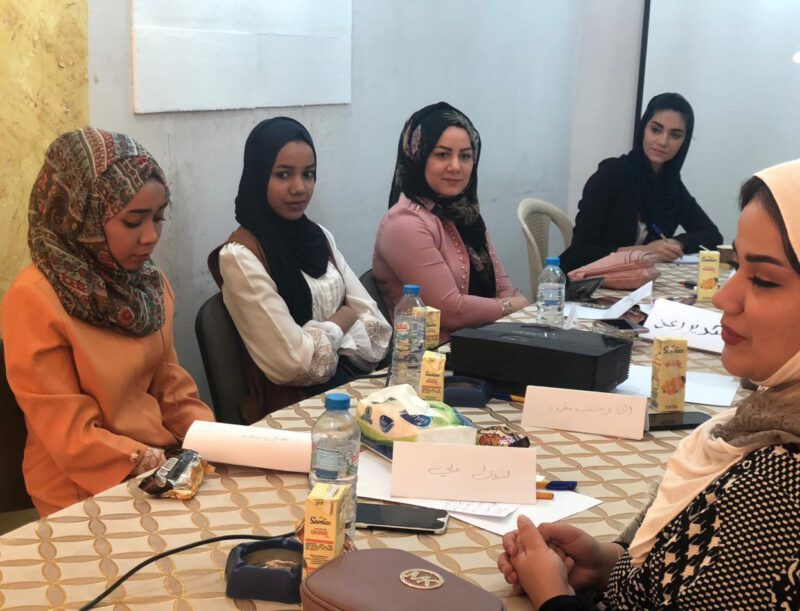
Internews is one of the world’s leading trainers of female media professionals, training more than 25,000 women in media skills since 2003 alone.

Internews helps women get on the air and in the newsrooms in societies where their participation has been marginalized, allowing for reporting on all issues—not just women’s issues—to be done through the voices of women in that society.

Mainstreaming Women’s Issues

To ensure that the media meet the needs of all audiences, Internews works to foster women’s leadership in the media industry so that issues of vital concern to women are “mainstreamed,” integrated across all programming and not relegated to a niche market.

In communities where specific gender issues are underreported, such as gender-based violence or women’s health, Internews has developed special programs produced by and for women.

PROJECTS

Internews’ work with women has involved training women media professionals, fostering their leadership skills, and producing programming on women’s issues in Africa, Asia, Eurasia and the Middle East. Examples include:

Lifting the Voices of Yemen's Women

To address gender inequalities in Yemen and bring women’s voices to the forefront, Internews is empowering Yemeni youth and media professionals to explore sensitive issues of gender, society, and human rights.

Yemen faces enormous gender disparities —the country ranked last of 128 countries in the 2007 World Economic Forum’s Gender Gap Index.

Through a partnership with the Yemeni Women’s Media Forum (YWMF), Internews is working with women and youth to produce 15 thirtyminute radio programs, which will air on national and mainstream media.

Topics for the programs were developed in a series of town hall meetings held throughout Yemen, where community members and NGO representatives suggested issues of education, health, the environment, and human rights. Program topics range from child marriage to the use of weapons in Sana’a neighborhoods.

Raising Awareness of Afghan Women in Government

Alarmed by a May 1, 2009 report that not a single female candidate had registered for Afghanistan’s provincial council elections in eight provinces, the Internews-supported radio programming service Salam Watandar quickly produced a number of stories, interviews, and an outreach campaign to highlight the issue.

The result? On May 9, a total of 342 women had registered for 124 seats on provincial councils around the country.

“We feel the media play an extremely important role in Afghanistan’s democratic transition,” said Masood Farivar, the manager of Salam Watandar. “Afghanistan has made great strides in the past eight years towards equal representation of women in politics, but the growing insurgency threatens to undermine their status. Elections are about the future leadership and direction of the country, and we felt it was important to encourage women to take part in that process.”

Pakistan’s First Radio Program by and for Women

In Pakistan, where only three percent of journalists are women, Internews has worked to increase the number of women working in media, training women at journalism programs established by Internews at universities from Peshawar to Rawalpindi to Balochistan. Internews launched Meri Awaz Suno (Hear My Voice), the country’s first independent syndicated program that features women as both producers and subjects.

In 2003, Internews built a state-of-theart independent radio production facility in Islamabad where women journalists are trained in radio reporting and production and work on Meri Awaz Suno.

The radio show airs on 19 independent radio stations across the country, and focuses on issues such as politics, education and health. Before Internews training, most reporters working on Meri Awaz Suno had little experience working in radio or journalism. Now they are leaders – the first women in Pakistan to work as independent broadcast journalists, and role models for young women.

Addressing Gender-Based Violence Against Darfuri Refugees

Many women who have survived the genocide and accompanying sexual violence in Darfur experience trauma so profound that grief turns to aggression. Desperate family members in the refugee camps have been known to leave these women tied up in their tents because of their unpredictable and sometimes violent behavior.

To help these and other women from Darfur, the local Internews reporting team produces Elles Parlent, Elles Écoutent (She Speaks, She Listens), which is the region’s first radio program intended for Darfur’s female refugees. Topics include mental health services available to women in the camps, the role of men in sensitization campaigns on gender-based violence, and services available to teen mothers, some of whom are raising children resulting from rape or forced marriage. Another program topic of unique importance in the refugee camps is the risks and fears around collecting firewood—when girls and women leave the camps to collect wood for their cooking fires, they are sometimes threatened, injured or raped.

Internews Network airs Elles Parlent, Elles Écoutent on its network of community radio stations for the Sudanese refugees in Chad and the local population. This network now reaches more than half the refugee camps.

Cultivating Women Leaders in Eastern Europe

Supporting local women leaders is integral to mainstreaming women’s issues and women in the media. In Ukraine, for example, Internews is proud to have nurtured and partnered with a number of media organizations led by women. Katya Myasnikova, the Executive Director of the Independent Association of Broadcasters (IAB), has been a strong leader in Ukraine and the region on digital transition and making space for local broadcasters on the airwaves. Natalia Ligacheva, founder and editor-in-chief of the web-based media watchdog Telekritika, has blazed a path against corruption and paid-for-placement reporting in the media. Women are also leaders at Ukraine’s Institute of Mass Information, Media Lawyers Association, the Crimean Information and Press Center, and the Regional Press Development Institute.

“We saw early on that some of the strongest voices on media, law, and regulatory reform were women—supporting these leaders has helped create a vibrant movement for open media,” says Marjorie Rouse, Internews Vice-President for Europe, Eurasia, Women and ICT Policy.

Programming on Gender Issues

Internews has created a range of programs that tackle sensitive subjects of particular concern to women, including:

  • Women and HIV/AIDS. Internews trains radio professionals how to cover HIV/AIDS effectively and ensures that journalists pay particular attention to the ways that HIV/AIDS affects women. As a result, radio and television stations in Kenya, Nigeria, Ethiopia, Côte d’Ivoire and India have covered underreported stories such as the plight of widows who have lost their land after losing their husbands to AIDS. Internews has also been instrumental in mentoring promising female radio journalists and helping them to advance professionally.
  • Women’s rights. Farah Al Nas, an Internews-founded community radio station in Jordan that focuses on women and youth issues, produces Women Today. Broadcast twice weekly, the program deals with issues such as women’s right to education and a career, and societal and legal discrimination against women. It also stresses the importance of empowering women financially and intellectually. Program topics include: Jordanian women’s right to give their nationality to their children; the right to get promoted based on qualifications rather than gender; and so-called “honor crimes” and sexual harassment.
  • Pregnancy and childbirth. To Your Health is a weekly radio show for refugees from Darfur who have fled to eastern Chad. It covers health issues such as the medical consequences of complications in pregnancy and childbirth. Following the broadcast of that program, there was a marked increase in the number of refugee women coming to camp clinics for prenatal counseling and to give birth, resulting in fewer complications, and healthier women and babies in the camps.

PDF version of Women in Media: Diversifying Voices, Strengthening Coverage


"I want [my radio show] to be a role model. That when women listen to it, and even men, they listen to it and they get to know that we are doing all the technical stuff as well as going into the field and doing recording – it should be an inspiration to all the women out there.”

— Sara Farid, radio producer trained by Internews, Pakistan

"People in Abéché criticize girls who work with men, but I close my ears so as not to hear it. I am proud of my work, and my parents are proud of me, too."

— Houda Mahamat Malloum, host, reporter and producer at a community radio station founded by Internews in Abéché, Chad