PublicationsAfghanistanInternews Newsletter on Freedom of Journalism in AfghanistanIssue #9 - February 2006Journalism Freedom Report v.9 Azizullah Habibi Despite promises from the government, security organs and authorities of the Ministry of Information, Culture and Tourism regarding the protection of journalists, little has been done to curb the alarming rates of intimidation, harassment and detention of practicing journalists across the country.
Positive Developments:
1. Pajhwok Afghan News reporter threatened in Baghlan province: According to Shir Mohammad Jahesh, “this happened after an explosion in the area of the Baghlan. I wanted to prepare a report on this event so I went to the police department, but they replied that nothing had happened in the area and that they were not informed about it. So I approached the PRT which is settled in the area, I received the information I needed from them and I added in my report that “the Baghan police department was not aware of the event when this report was being prepared””. When the report went on air, the Chief of the Police ordered his subordinates to “bring the author of this report by force”. When Media Watch contacted the Chief of Police, he rejected the reporter’s claims and described them as baseless. He said “we respect reporters and consider them as assistance in ensuring security we never misbehave with journalists.” General Mir Allam said he considered the claim of the reporter to be propaganda, a rumor and described it as a provoking move from his regional rivals. But Danish Karohkail, director of Pajhwok Afghan News, confirmed that his reporter had been threatened twice by the Chief of the Baghlan Police. Karokhail added “when our reporter was threatened for the second time, we contacted the spokesperson of the Ministry of Interior and informed him about the issue, and he promised that this would not happen again in future.” Media Watch contacted the office of the spokesperson of the Ministry of Interior to find out about their position regarding this issue, but no one was ready to answer our questions and Daad Mohammad Rasa, the media relations officer of the Ministry of Interior, said “Stanizai doesn’t have time to be interviewed”. We approached the Ministry several times but never succeeded to meet him even after 25 days. Rahimullah Samandar, director of the Afghanistan Independent Journalists Association and a member of the Media Commission for Investigating Media-Related Offenses said “as soon as we came to know about the issue, we contacted the acting Minister of the Ministry of Interior, Eng. Zarar Ahmad Muqbel, and informed him about the incident. He called the Chief of Baghlan Police and solved the problem.” According to some journalists in Baghlan province, these types of problems have been partly resolved and the situation has improved. 2. Inauguration day of the National Assembly, a problematic day for journalists: On December 19, 2005, on the inauguration day of the Afghan National Assembly, numerous people and especially journalists faced problems. The Parliament is located in the 7th district, across from the Ministry of Commerce in Kart-e- Se, but security agencies had closed the main roads of Kabul city to vehicles and even local people were not allowed to walk from Dehmazang intersection through to the Parliament building. Reporters who had inauguration session entry cards were subject to the same restrictions. After all those troubles, when journalists managed to reach the Parliament compound, they faced harsh treatment from the security guards. The way security guards behaved was filmed by Ayna TV reporters and broadcast. The General Director of the Wolesi Jerga, Azizullah Ludin, told Media
Watch that ensuring security for the National Assembly is the duty of
the secretariat of the Wolesi Jerga, but the bad treatment journalists
received happened outside the parliament building where the Ministry
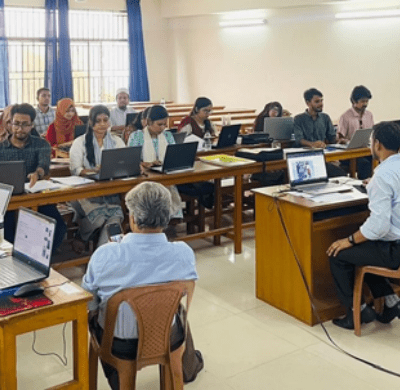
of Interior had assigned its staff. In an interview with Media Watch, Rahimullah Samadar said: “journalists faced a lot of problems on the inauguration day of the National Assembly, they were beaten up, their personal vehicles were taken by the police and used without their permission and finally, they could not easily cover the event”. According to him, all journalists were kept in one room and supposed to be provided with live audio and video coverage of the session, but they could only see the ceremony with no sound. amandar added that the authorities of the parliament secretariat “created problems for the journalists so that they would not have balanced access to information”. He said “on the inauguration day, journalists were not allowed to enter the inauguration hall and only three journalists were allowed to enter as representatives of mass media, while none of them could represent others. The place which given for the reporters was not suitable for them to cover the event easily.” Azizullah Ludin, General Director of the Wolesi Jerga, confirmed these allegations and considers them minor stating “the equipment had been newly installed and we had no experience in using it, therefore there was no sound for a short period of time in the press center”. As to why the journalists were not allowed to enter to the session hall, he added “as much as it was feasible and possible, and as much as we realized that the journalists would not cause disturbance for the guests and elected candidates and disturb the order, we allowed the journalists to enter the hall group by group.” On the same day of the National Assembly inauguration, December 19, 2005, Mohammad Saber Fahim, a reporter for Salam Watandar, was mishandled by the national police and not allowed to go to his office, 100 meters away. It is worth mentioning that Salam Watandar office is located 200 meters away from the parliament building. Again, on December 20, 2005, the same reporter of Salam Watandar, Saber Fahim, and his colleague Mirwais Jalalzai were insulted and mishandled by police officers 50 meters away from their office. On December 21, 2005, as five staffers of Salam Watandar were travelling in Salam Watandar’s vehicle towards their office, in the area of Dehkepak, 11th district of Kabul city, they were stopped by the security guards of the personnel director of Kabul security police headquarter, General Habib Khan Kochi. The driver was insulted and beaten up, and they were all handed over to the 11th security police station. After a two hours detention, the journalists were released. When Media Watch asked the personnel director about the reason of this incident, he rejected the accusation of physical violence and added “we pressed the horn many times, but the driver paid no attention to it. Beside, the said vehicle had neither traffic documents nor a plate number, therefore, it’s our responsibility to stop these types of vehicles, so we did hand them over to the 11th security district of the Kabul.” However, the chief of the 11th security police station, Shah Wali Tamana, said nothing about the traffic document and plate number to Media Watch. He said “as soon as we understood that they were reporters, we released them.” Saeed Makhdom Raheen, the Minister of Information, Culture and Tourism and the head of the Media Commission for Investigating Media-Related Offenses, told Media Watch about the problems created by the security forces “I ask all security agencies to cooperate with the journalists in performing their duties and consider them as assistance for ensuring security in the country.” 3. Ariana TV reporters beaten up in Kabul: An Ariana TV reporter, Wahid Paikan, and his cameraman, Hamed Saadaat, were insulted and beaten up by the 2nd police department of Kabul and the Ministry of Interior Quick Reaction Forces while they were covering the protests of the vendors in Foroshgha, Kabul city, and were forced to leave the area. According to Wahid Paikan, “one of the officers who had a police uniform insulted us that is not suitable for a person holding that position”. Shekaib Hazrati, the General Director of Ariana TV, told Media Watch in an interview “as freedom of expression is a new phenomenon in Afghanistan, and considering the current situation we will consider that the problem faced by the reporters is not major and worrying”. Regarding Wahid Paikan and Hamed Saadaat, he added “as soon as we were informed about the issue, we approached the 2nd security police station, they expressed unawareness and added “if our officer might have done this mistake, we do apologize." When Media Watch contacted the 2nd security police station and division of the Quick Reaction Forces, they refused to be interviewed and said they did not have the authority to be interviewed, and asked us to contact the ministry of interior’s spokesperson. The spokesperson’s office, in turn, refused our request for an interview by saying they did not have time. 4. Efforts for the repealing of the Journalism Faculty: On December 29, 2005, the Board of Directors of Kabul University decided to decrease the number of faculties from 13 to 8. Consequently, the issue of repealing the Journalism Faculty arose, and was discussed with the lecturers of the Faculty. The lecturers expressed their serious disagreement, but according to Aziz Ahmad Fanoos, Lecturer of the Journalism Faculty, the authorities of the university didn’t pay attention to their comments. On December 29, 2005, the Board of Directors of the university affirmed that the faculties of fine arts and journalism should work under the supervision of the Literature and Language Faculty. At the same time, they agreed the number of journalism departments should be decreased as well. Media Watch approached the university chancellor’s office, however Prof. Abdul Zaher Stanizai, who was the signatory of the repealing paper, and Deputy to the Chancellor, would not comment on this issue. After the repealing paper was received by the Journalism Faculty, 17 lecturers of the mentioned faculty condemned and denounced the decision of the university in an open letter to the chancellor’s office, and asked for the decision to be reviewed. Media Watch asked the Minister of Information, Culture and Tourism and the head of the Media Commission to provide his opinion “that is their own duty; I have no comment”, he said. Rahimmullah Samandar, the director of AIJA, commented that this decision was a way to declare both journalism and journalists worthless, and said that on the contrary, the Journalism Faculty should be developed. Finally, on 28 January, 2006, the Afghanistan National Assembly rejected the decision of the Kabul University authorities to merge some of the faculties with each other, and declared that the Parliament has the authority to take these types of decision. 5. Ali Mohaqiq Nasab sentenced to sixth month imprisonment: Ali Mohaqiq Nasab, editor in chief of the weekly “Hoqoqe Zan”, earlier sentenced to two years of imprisonment, has been commuted to six months of imprisonment and was released on bail. Mohaqiq Nasab who was arrested on October 1st, 2005, was released after two months and 24 days in jail, but the remaining 3 months and 6 days is a suspended sentence pending good behaviour. Mohaqiq Nasab was charged with blasphemy for publishing “blasphemous articles” in the 7th issue of Huqoq-e-Zan. Abdul Alim Sharifi, the prosecuting attorney of Mohaqiq Nasab, mentioned in court that the Supreme Court decree center had issued a Fatwa on Nasab’s Blasphemy, and later added that if Nasab was not given a more severe punishment, there would be a national uproar. Meanwhile, some religious Ulema working under the supervision of the National Ulema Council in some provinces like Kunduz, Paktia, Ningarhar, Qandahar, Khoost and Balkh, have protested and asked through open letters for harsh punishment for Mohaqiq Nasab. There were 12 allegations against Mohaqeq Nasab, including denial of the Prophet Mohammad's traditions, naming Allah as brutal, being blasphemous, and other similar instances. Nasab described the allegations as baseless and said he is a Muslim and follows all Islamic principles. He added that the “Woman and Blasphemy” article had a clear target, and that if this article or the other materials published in the 7th issue of Hoquq-e-Zan have been misunderstood and have hurt the Islamic religious feeling of the people, he apologizes. He additionally thanked the High Court headed by Muzafaruddin Tajali for his release. The Minister of Information, Culture and Tourism appreciated Nasab’s release and confirmed that freedom of expression had thus been respected, but he informed media practitioners that they should not overstep the line. 6. Nai carries out professional training for over 800 journalists: Nai, Supporting Afghanistan Open Media has been operating for almost one year, supporting Afghan media, and providing training courses for journalists. These programs are supported by Internews, with the financial support of the European Union and USAID. Within five months 648 journalists have been trained in: Windows XP, Cool Edit, MS Word, Basic Journalism, Advanced Journalism, Gender, Management, Business Development, Human Rights, Drug and Mental Health, Family Planning, Pashto Language, English Language and Radio Production. Nai implements two types of training, theoretical and practical. Theoretical training is conducted in Nai training centre in Kabul, while practical trainings usually take place in over 31 radio stations operating all over Afghanistan. These trainings will continue for at least another six months. Nai delivers training directly to journalists and managers at media outlets as well as providing training for journalism faculties at universities across Afghanistan. 7. Al-Jazeera TV reporter arrested by CFC-A: According to Mohamad Sediq, administrator of Al-Jazeera TV network in Kabul, one Al-Jazeera reporter (Waliullah Shaheen), his cameraman (Saeed Naser) and their driver (Mohammad Agha) were arrested by the CFC-A (Combined Forces Command-Afghanistan) in Wazir Mohammad Akbar Khan while filming in the vicinity of Camp Eggers in Kabul. They were interrogated in cold weather under snow falling for almost an hour, their equipment was confiscated and the individuals were then taken to the 10th department of police in Kabul. The Media Relation officer of the CFC-A, Lt. Mike Cody, told Media Watch: “Combined Forces Command-Afghanistan personnel reported to the scene saw evidence that security features had been filmed. As a result of the incident, CFC-A withdrew the credentials of the reporters involved.” Ground rules for credentialed reporters specify that photography showing levels of security at military installations may not be published. Likewise, signs at the gate nearest to the incident warn, in three languages (English, Dari and Pashto) that photography is not allowed. He rejected the allegation of the Al-Jazeera TV production crew who said they were investigated in cold weather under snow falling for a long time. Mohammad Sediq denied having filmed prohibited areas and he added: “our reporters were 50 meters away from the signs saying “photography is not allowed.""
It is worth mentioning that their equipment was returned to them after one week, and their credentials (identification documents) have still not been returned to them.
The Media Commission for Investigating Media Related Offenses, in a meeting held on the 19 January, 2006, fined Afghan TV 50,000 Afghanis for broadcasting immoral footage. The Minister of Information Culture and Tourism, in an interview with Media Watch, said: “we had informed the TV stations they should not broadcast programs contrary to traditions, customs and social morality. But Afghan TV paid no attention to our warnings so we fined them”. The Minister did not clarify which programs had immoral footage. Ahmad Shah Afghanzai, director of Afghan TV, did not accept the decision of the Commission as he argued that their enquiry was politically motivated. He added that this decision was made in his absence and that the Commission had not alerted them previously. ‘Nothing immoral has been broadcast via Afghan TV and the music which is being broadcast by Afghan TV is similar to what other TV stations in Afghanistan broadcast”, he said. “Whatever we air, other TV stations also air, in this case, all TV station should be fined. Afghan TV has critical programs and reveals matters to Kabul citizens which the Minister of Information, Culture and Tourism and his team are not happy with”, he added. “They made this decision to impose pressure on Afghan TV. What is “contrary to social morality” and what is not, is not being defined and explained to us.” Afghan TV refused to pay the fine and complained to the General Attorneys Office. Meanwhile, the Media Commission has also approached the General Attorneys Office to collect the payment of the fine. Finally the General Attorneys Office has announced that it agreed with the Commissions decision and asked an authorized court to punish Afghan TV. Media Watch notes that on the day of publishing this edition of the Journalism Freedom Report Afghan TV had still not paid the fine. ------------------------------------------------------------ Note: To maintain the confidentiality and to protect sources it was
not possible for Nai to corroborate the incidents by carrying out additional
investigations. None of the material herein may be reproduced without
permission from Nai. |
|
|