Publications
Afghanistan
Nai- Supporting Afghanistan Open Media
Media Watch Report
Afghan Journalism Freedom Report #19
February 2007
(PDF version
of Issue #19 - English)
Sediqullah Tawhidi
Media analyst
In this issue, Media Watch highlights the recent clash between Radio
Television Afghanistan director and the minister for culture and youth
affairs. Minister Abdul Karim Khuram made a senior appointment in RTA
without consulting its director, Najib Roshan. According to the Media
Law, the minister should have consulted with Roshan and then sought presidential
approval for the appointment. The appointment of Abdul Ghani Mudaqiq
as director of the radio division of RTA highlights how the administration
has once again contravened the rule of law by ignoring the procedures
outlined in the Media Law. Furthermore, this case highlights that the
independent commission that is meant to oversee RTA is prevented from
being fully functional.
Media Watch also investigates the following cases:
- Tolo TV presenter removed following alleged government
pressure
- Eqtedar-e-Millie Weekly secretary summoned by prosecutors for writing
critique of attorney general
- Kabul Weekly closes due to financial problems
- Abduction of two German journalists denied by officials
- Balkh province journalists protest proposed amendments to Media Law
- Kabul-based radio station organizes peaceful public protest
- Nai Journalism Training Radio begins trial broadcast
- New Herat and Kabul TV stations launch
- Badakhshan RTA building reconstruction begins
RTA Chairman, Minister of Culture and Youth Affairs clash
over appointment
RTA Chairman Najib Roshan and Minister of Culture and Youth Affairs
Abdul Karim Khuram have clashed over the appointment of Abdul Ghani
Mudaqiq as director of the radio division.
Mudaqiq, a former Ariana TV news department director, was appointed
to the post by a presidential order on Dec. 20. His appointment
angered Roshan, who told journalists in a press conference that
he was not aware of the appointment. Roshan said Khuram proposed
Mudaqiq to the president without consulting him.
"Due to the RTA chairmanship's ignorance about the appointment
of Mr. Mudaqiq, I have asked for a second order from the President," Roshan
said. "Therefore, I kindly ask Mr. Mudaqiq
not to come to work until a second decree is delivered from the
President."
The appointment of Mudaqiq violates the Media Law, according to
Afghanistan National Journalists Union President Sayyid Hussain
Fazil Sancharaki.
"According to the law, RTA is a public and separate entity from
the Ministry of Culture and Youth Affairs, therefore the RTA director
and the National Radio and Television Commission, which
is based in RTA, are in the position to recruit or dismiss RTA employees,”
Sancharaki said. “On the other hand, since RTA has not been separated
from the Ministry of Culture and Youth Affairs to date, the ministry
and the head of RTA can appoint RTA employees by consultation."
The Media Law states that any dismissal or appointment in
key RTA departments should be proposed by the RTA director to the National
Radio and Television Commission, following which presidential approval
can be sought.
As far as the appointment of Mudaqiq is concerned, Media Watch
believes that legal procedures were not followed. Likewise, the
National Radio and Television Commission, which should have nine
members according to Article 30 of the Media Law, currently has
only five members. The law states, “For the purpose of regulating
the activities of National Radio & Television (NRT) in a better fashion,
a National Radio and Television Commission shall be established.
The Commission comprised of nine members shall be formed for a period
of four years.” The commission has not being given its due authority
and remains paralyzed.
Media Watch believes that if the laws were applied, the conflict
between the RTA director and minister could have been avoided.
Given the creation of legal procedures and a rule of law process,
it is disturbing that the administration – which is charged with
executing the law – is not following the law itself. It's worth
nothing that the lack of rule of law has been a consistent problem
in Afghanistan that has undermined successive administrations.
Tolo TV presenter removed after alleged government
pressure
Tolo TV presenter Razaq Mamoon has alleged that he was fired Nov.
28 as a result of political pressure from government officials.
Mamoon hosted the controversial Gufteman talk show, which
examined current affairs, political and economic issues. Senior
officials and experts frequently appeared on the show.
Speaking to the Media Watch, Mamoon said: "Gufteman was
an exceptional talk show in the history of Afghan media that was
executed with an absolutely new approach. Gufteman monitored
the government's activities and exposed each and every deficiency
and scarcity. Gufteman was
based on freedom of speech and it was against domestic terrorism,
administrative corruption, oppression and ideological motivations,
and the government felt that Gufteman was against it.”
Mamoon alleges that four senior government officials pushed for
the program's end. He named Farooq Wardak, the minister of Government
for Parliamentary Affairs and head Office of the Chief of Staff,
Dr. Rangin Dadfar Spanta, the minister of Foreign Affairs, Zarar
Ahmad Muqbel, the Interior Minister and Jawid Luddin, the director
of the President's Office.
"They acted against the talk show in cooperation with each other," Mamoon
alleged.
Mamoon did not blame Tolo TV for his dismissal.
"Tolo TV has no fault in this issue," he said. "The
channel defended me as much as it could, but when the pressure increased
and jeopardized the channel's interests, it decided in my absence to close
down the show," he
said.
Tolo TV CEO Sediq Ahmadzada rejected Mamoon's allegations.
"This allegation of Mamoon is absolutely wrong and Tolo has never come
under government pressure," he said. "Mr. Mamoon left the job
due to a deduction in his salary. The show will still be produced and
broadcast."
Gufteman is still on air and is being hosted by Massood
Qiam and Mohammad Abdullah.
Afghanistan National Union of Journalists President Sayyid Hussain
Fazil Sancharaki told Media Watch that political pressure could
have been a factor in Mamoon's dismissal.
"Our assumption is that not only were government officials involved
in the issue, but powerful people from outside the government were also
negative about the show and were claiming that Mamoon was acting as a
prosecutor and was investigating interviewees," he said. "But
it's not clear whether he was fired because of these pressures or if
there were other motives."
Ministry of Foreign Affairs Spokesman Sultan Ahmad Baheen said
Dr. Spanta did not act against Mamoon or the show.
"The Foreign Affairs minister is an advocate of freedom of expression
and he would never consider bring such a pressure to media," Baheen
told Media Watch. "Dr Spanta was not involved in Mamoon's removal
and never urged the channel to do so."
Media Watched tried contact Dr. Wardak, but due to engagements,
he introduced a spokesman, Asef Nang, to speak on his behalf.
"Dr. Farooq Wardak has no information about the dismissal of Mr.
Mamoon from Tolo TV," Nang said. "The channel is independent
and has the authority to hire or dismiss its employees."
In a phone interview with Media Watch, Luddin strongly rejected
Mamoon's claims.
Interior Ministry spokesman Zemarai Bashiri also rejected the accusations.
"The Interior Ministry is fulfilling its own duties," he
said. "The
TV channels are fully free in appointing and firing their staff
and the Interior Minister Zarar Ahmad Muqbel has never interfered in the media's
personnel affairs."
Media Watch believes that if Mamoon's claims regarding pressure
from government officials are proved to be true, it will signal
a new era of oppression on the media. Gufteman was a critical
program that created headaches for officials with its serious examination
of government inaction and deficiencies. A lack of such critical
programs in the media would hinder the checks and balance on the
government by the fourth unofficial branch and push our society towards
oppression. Media restriction will not only be ineffective, but will
serve as a barrier to the country's development.
Eqtedar-e-Milli Weekly secretary summoned by prosecutors for
writing critique on Attorney General
Abdul Shukur Akhlaqi, the secretary of Eqtedar-e-Milli Weekly,
wrote an article criticizing the Attorney General's war on administrative
corruption. Following its publication, Akhlaqi was arrested.
"On Nov. 4, one day after the release of the article, the Attorney
General phoned me and I was asked if the published article was mine," Akhlaqi
told Media Watch. "I told them that yes, the article was written
by me. I was then asked to go the Attorney General's Office to
give further details, but as soon as arrived I sensed that the situation
was different. I wasn't asked to go there to answer a number of questions
about the article because their questions indicated that they were not
happy with the article."
Eqtedar-e-Millie Editor-in-Chief Sayyid Mohammad Ali Rezwani said
Akhlaqi's questioning was illegal.
"If a violation of the law took place, first of all, it should have been
investigated by the Commission on Media Violation, and if deemed
necessary, the case should have then been referred to the justice departments," Rezwani
said. He added that the Office of the Attorney General asked him
to make sure that Akhlaqi would not try to leave the country.
Mohammad Wahid Gharwal, a member of the Commission on Media Violation
and head of Kabul University's Faculty of Journalism said: "There
have been many cases of journalists being bothered or detained
without the commission being informed, which means that journalists were
first prosecuted and questioned, and then the issue was referred to Commission
on Media Violations."
Attorney General Abdul Jabar Sabet denied questioning Akhlaqi.
"I haven't questioned Mr. Akhlaqi," he said. "Only Dr. Narmgoi
was once detained and investigated based on a legal complaint from
Mr. Farooq Wardak, the government minister for parliamentary affairs. Personally,
I haven't illegally detained or questioned anyone because I am a lawful person."
Media Watch tried to speak with the prosecutor who reportedly questioned
Akhlaqi, but he declined to comment.
Akhlaqi's detention was in violation of the rule of law. Media
Watch expresses concern over the rising number of journalists being
detained or questioned by prosecutors without a referral from the
Commission on Media Violations. The Attorney's General's Office,
as an institution promoting the rule of law, should not act outside
the law or abuse its judicial authority.
Kabul Weekly closes due to financial problems
Kabul Weekly Editor-in-Chief Faheem Dashty wrote in the newspaper's
Nov. 26 edition that the paper is shutting down due to a lack of
money. Kabul Weekly was among the first newspapers to begin publishing
following the fall of the Taliban in 2001.
"Basically it was a financial problem," Dashty told Media
Watch. "We
tried to avoid this problem by reducing our expenses, which helped
the paper survive for another six months, but this effort also failed to work
and so the paper was closed down.
"Probably some political factors also helped in discouraging donor
organizations to assist," he added.
Many print publications are struggling to survive.
The Killid Group Executive Director Aziz Hakimi said Killid and
Mursal magazines also face serious financial challenges, but the
organization is working to prevent their closure.
"Our aim has been to provide readers with necessary information,
but lack of funding jeopardizes the survival of the magazines," he
said. "We
are using different approaches to seek funding for the magazine,
but how far we make it is not clear."
According to the Article 2 of the Media Law, the government must
“promote and develop free, independent and pluralistic media.”
When asked why the government has not done more to support independent
media, Deputy Minister for Culture and Youth Affairs Mubarez Rashedi
said: "Although we can't support the independent media financially,
we have given full abstract support to them and we regret the closure
of Kabul Weekly."
Afghanistan National Union of Journalists President Sayyid Hussain
Fazil Sancharaki said publications that struggle will survive.
"After five years, only the publications that follow journalism
standards and those that have gone through growing pains will survive," he
said. "They
will continue operating because of their passion for their work.
They will carry the media light and light the way for others."
Media Watch recognizes the rapid growth and decline of the print
press over the last five years. Several hundred publications are
registered with the Ministry of Culture and Youth Affairs, though
only a small percentage of papers are still in print. The two main
reasons for the closure of so many newspapers has been a total
dependency on foreign donors and a lack of government support to
the independent media.
Media experts believe the best way to ensure the survival of print
publications is to merge several publications under one name.
Abduction of German journalists denied by officials
On Dec. 5, reports emerged that two German journalists were abducted
on the Kandahar-Uruzgan highway. The alleged kidnappings were first
reported by the Afghanistan NGO Safety Office. Afghan and German
government officials denied the reports.
"The released report by ANSO about the abduction of two German journalists
was absolutely incorrect and no German reporter has been abducted," said
Tubis Isna, a German Embassy press office deputy.
ANSO officials later admitted that their organization made a mistake.
"Two French NGO workers, whose abduction had been planned, were stopped
on the Kandahar highway," ANSO employee Ruhollah told Media Watch. "They
were not reporters and our report was mistakenly released."
Media Watch again reminds the media and others not to release reports
without confirming the accuracy of the information. In the rumor-rich
context of Afghanistan, such reports can create confusion and fear among
media workers.
Balkh province journalists protest proposed amendments
to Media Law
Journalists from Balkh province held a gathering on Dec. 7 to protest
reported amendments to the Media Law, which is being reviewed by
Parliament. According to Media Law experts and lobbyists, the proposed
amendments would
impose restrictions on the media.
"The National Union of Journalists
expresses its concerns to the religious and cultural commission of the
Lower House and asks the commission to approve the law without bringing
any amendments," Arman-e Milli Editor-in-Chief
Mir Haidar Mutahar said.
Media Watch believes that legislators must carefully review the
Media Law, which was released by the Karzai Administration in December
2005. Any amendments should be in favor of freedom of the press
and freedom of expression.
Kabul-based radio station organizes peaceful public protest
Kabul citizens honked their horns on Dec. 13 in response to a campaign
initiated by Radio Watandar, 87.5 FM. The "We Want Electricity" campaign
was a form of public protest, according to station officials. The
campaign marked the first time that an independent media outlet
encouraged the public to engage in a peaceful protest to demand better
public services.
"This was a good program because it turned
the government’s attention towards the problem," said Ghulam Ali,
a Kabul taxi driver who had honked his horn in support of the campaign.
Radio Watandar officials said that lack of electricity has been
among the chief complaints of its listeners since the station launched
in October 2005. Kabul residents have limited access to public
electricity in winter. Radio Watandar has a format where listeners
leave messages with requests, comments and complaints on a range
of issues.
"The radio station alerted its listeners that on Dec. 13, 2006,
when they hear the sound of horns on the radio they should honk their
car horns," said
Radio Watandar owner Mirwais Social. "After the campaign, in which
most drivers participated, electricity service improved in Kabul.
I don't know if the impact was our radio campaign or not, but I
can say the improvement is declared simultaneously with our campaign
and now the problem has been solved to some extent."
According to some anecdotal reports, police attempted to prevent
drivers from honking. Kabul Police Department spokesman Fahim Kohdamani
denied this.
"If such a thing took place during the campaign, it was only because
of a lack of awareness on the part of some police," he said. "There
were no orders from the police to stop the campaign."
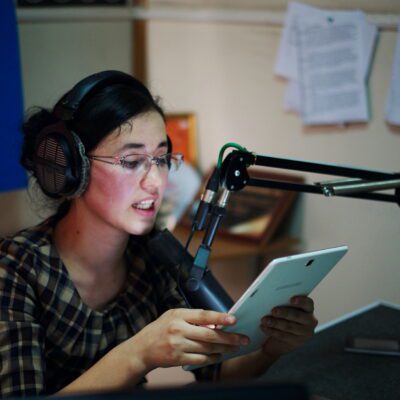
Nai Journalism Training Radio begins trial broadcast
Nai launched the country's first and only educational radio for
media professionals on Dec. 25, 2006. The station, called Radio
Nai ('reed flute') began broadcast on 94.5 FM in Kabul
City.
The station's inaugural ceremony was attended by Nader Shah Aryan,
the chairman of the frequency department of the Ministry of Communications,
Sayyid Hussain Fazil Sancharaki, president of the Afghanistan National
Union of Journalists and media professionals from a range of organizations.
In his opening remarks, Nai Executive Director A. Mujeeb Khalvatgar
said that the radio would strive to provide professional trainings
for journalists. Radio Nai will begin by broadcasting eight hours
daily.
"The growth of TV and radio station is very beneficial for the country," said
Aryan. "Before, journalists were only trained in the university
and journalism courses, but this radio can train a large number of journalists
at one time."
Sancharaki said he appreciated the creation of the station.
"As reporting and media work is a new phenomenon in Afghanistan and has
yet to reach its place, therefore we must know better what responsibilities
we have to our society and our profession," he said. "We must
understand how to carry out our responsibilities in the fragile situation
of our country. And it's good that Radio Nai has paid attention to this
fact. Reporters can learn a lot by listening to this radio."
Radio Nai will act as a training platform for journalism trainees
and educate the public and media workers about journalism ethics.
New Herat and Kabul TV stations launched
A private television station called Hari TV has been launched in
Heart city.
"Hari TV started its trial broadcast three months after its establishment," Hari
TV Chairman Sayyid Najeeb Yousefi said in a speech during the station's
inauguration. "The
channel goes on air four hours every night, which includes political,
cultural, social and other entertainment programs."
Herat's Department of Culture and Youth Affairs Director Wali Shah
Bahra said he considers the establishment of private TV channels
a cultural revolution. Two other private TV channels, Ghoryan
and Saghar, exist in Herat province.
Meanwhile, a new TV station will be launched in Kabul City in March.
Noorin TV will be available in Kabul only, but will expand to other
cities, according to station officials.
"Noorin TV has been created by Hajji Mohammad Arif Noori, a Panjshiri
businessman," said Noorin TV official Sayyid Halem Hashemi. "The
station will try to cover Afghanistan's cultural issues."
Abdul Hamid Mubarez, a senior advisor to the Afghanistan National
Union of Journalists, called the establishment of this channel
an effective step.
"Afghan TV channels are becoming political, so cultural TVs are
very much needed and the launch of Noorin TV is good news."
Badakhshan RTA reconstruction begins
The construction work of Badakhshan RTA building, worth 900,000
afghanis began on Dec. 10. The former RTA building was destroyed
in an electrical fire caused by poor wiring.
"The building contains 22 rooms, which will meet RTA's basic technical
needs," said RTA Badakhshan Director Sayed Mahmood Jalali.
----------------------------------------------------------
For any queries or information please contact:
mediawatch@nai.org.af
Sididqullah Tauwhidi
Media Analyst
sidiqullahtauwhidia@internews.org
Mob: 009370279176
OR
Jawid Ahmad
Media Monitor and reporter
jawid.ahmad@nai.org.af
Mob: 0093799340831
The journalist can contact our Media Defense Lawyer, Mohammad Abdullah
for any legal problem.
Mobile: 0093797192050
------------------------------------------------
To obtain a soft copy of the report, please visit the following
link: www.nai.org.af
Note: To maintain confidentiality and to protect sources it was not possible
for Nai to corroborate the incidents by carrying out additional investigations.
None of the material herein may be reproduced without permission
from Nai.
This newsletter was made possible through support provided by the
office of the United States Agency for International Development
through Counterpart International Inc, under the terms of award No. 306-A-00-05-00511-00.
The opinions expressed herein are those of the author(s) and do not
necessarily reflect the views of the U.S. Agency for International Development
and Counterpart International.
|